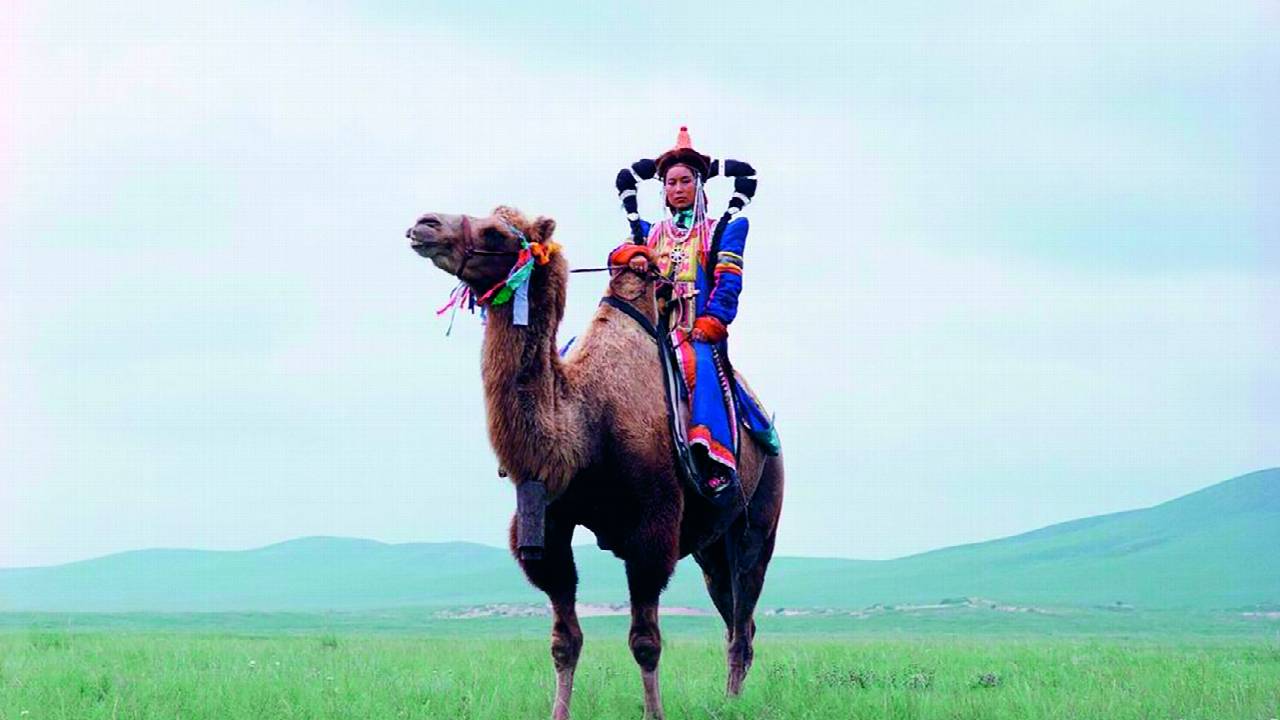
Joan of Arc of Mongolia
(Johanna d'Arc of Mongolia)
Ulrike Ottinger
- 1988
- France, Western germany
- Drama comedy
- 2h45mn
- Original version with French subtitles
- Color
Aboard the Trans-Siberian Railway, a group of cosmopolitan Western women are abducted by Ulan Iga, a Mongolian warrior princess.
Balancing epic adventure with philosophical reflection, German filmmaker Ulrike Ottinger questions the possible dialog between civilizations and ethnographic illusions. While she subtly ironizes, through Delphine Seyrig’s character, about the Western need to understand and study all other cultures, in fine it’s the Mongolian world that reveals our own traditions and our post-colonial reflexes that even the best intentions haven’t really erased. Nonetheless, allowed to shoot in Inner Mongolia, Ulrike Ottinger conveys her fascination for its people with a restraint and respect that commands admiration.
Credits
- With : Xu Re Huar, Irm Hermann, Delphine Seyrig, Peter Kern, Inés Sastre...
- Screenplay : Ulrike Ottinger
- Photography : Ulrike Ottinger
- Editing : Dörte Völz-Mammarella
- Music by : Wilhelm Dieter Siebert
- Production : Hans Kaden














Rebeka Warrior